
Don't Move
My earliest memory is from 1968—or maybe ’69. I hedge because time, especially early time, has a way of blurring. But this is the one memory I know is real, not borrowed.
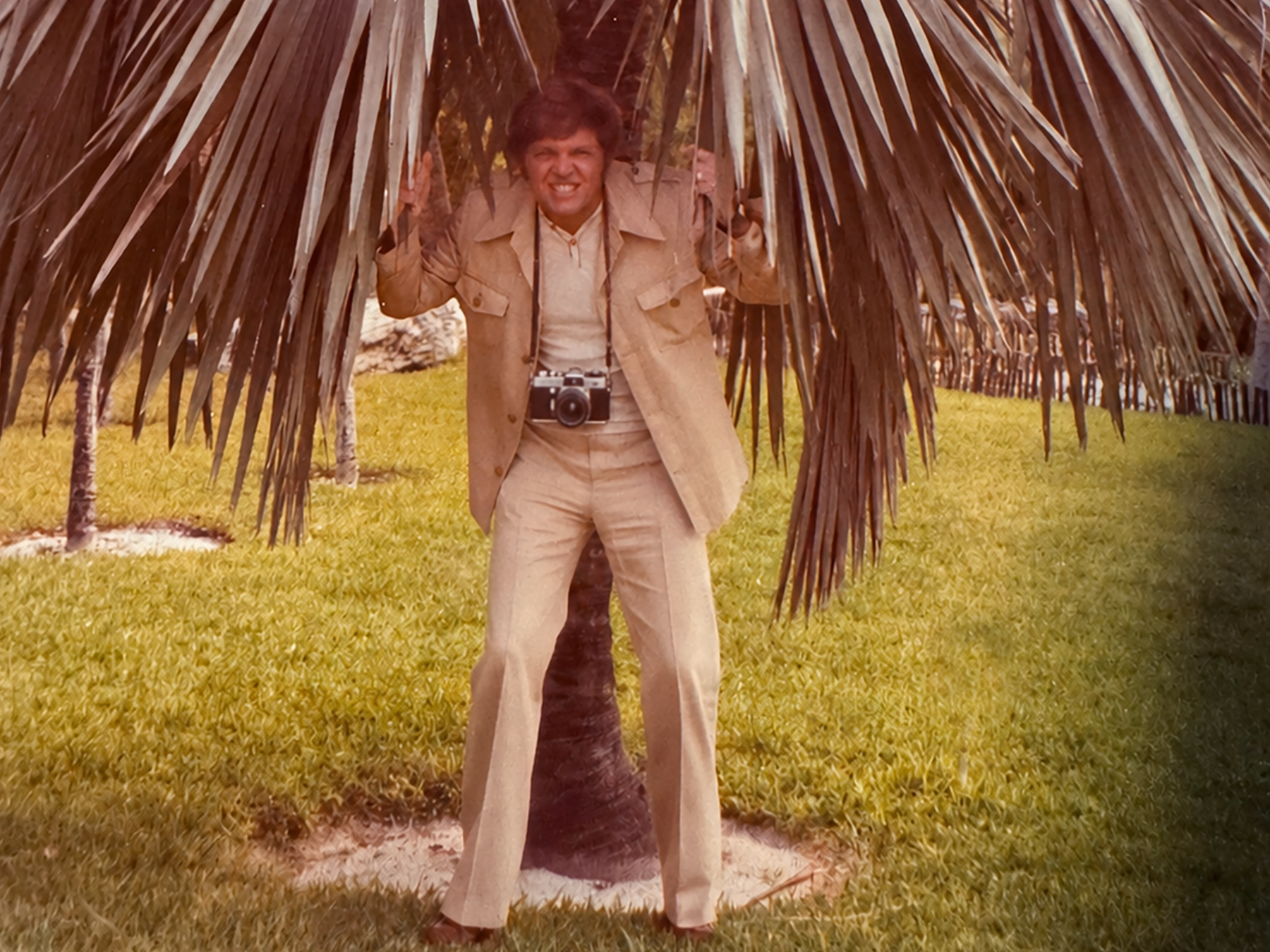
It doesn’t arrive through one of the thousands of photographs and 35mm Ektachrome slides my father took with his omnipresent, metal-bodied Minolta SRT-101. He documented everything. At the time, it felt ordinary. Only later did I realize he was unknowingly assembling an archive I would one day turn into stories.
Those thousands of slides and photographs have become more than a record of our lives. In many ways, they are what inspire these stories. I can pull out a slide I haven’t seen in decades and suddenly an entire world comes rushing back—the people, the places, the things we thought were ordinary at the time. My father’s Minolta captured the image, but what surrounds it is where these blogs begin. A photograph gives me the moment he saw through the viewfinder; writing lets me wander beyond the edges of the frame and remember everything the camera couldn’t see.
I still have his camera. It sits perkily on a bookshelf next to my writing desk. Long before it kept watch over these stories, it was pointed at us. Through its lens, I grew up. My mother, my grandparents, aunts, uncles, cousins, friends—we all stood on the other side of that camera at one time or another, looking toward its shutter and, just beyond it, toward my father.
He never took a photography course, but he had an eye—and he was equipped. He had a leather camera bag stocked with a telephoto lens, a wide-angle lens, filters, flashes, lens cleaner, and whatever else a serious photographer might need. He may have been entirely self-taught, but he certainly had the gear. I can still picture that bag, packed with all those mysterious pieces of equipment, ready to go wherever we went.
And he knew how to use it. He knew where to stand, what to include, and when to press the shutter. I don’t remember him fussing over any of it. He simply lifted the camera, focused, and took the picture. Birthdays, vacations, holidays, ordinary afternoons—he saw something worth saving in all of them.
Now his Minolta SRT-101 sits beside me while I write about the people and moments it once captured. I like that it’s there. The camera he used to record our lives now keeps me company while I write about them.
But my earliest memory doesn’t come to me as an image.
It comes as a feeling.
It involves Jingles, a rocking horse mounted on springs and suspended inside a sturdy metal frame. My mother often told the story that the moment I saw the horse, I proclaimed, “Jingles!” as if I were greeting an old friend.
I don’t remember the room or who else was there. What I remember is the motion—the rhythm of forward and back, the resistance of the springs, the creak of metal doing its job. I remember feeling held, contained, safe enough to move.
My father isn’t in this memory. At least not visually. Which is strange, given how often he was behind a camera. But that absence is how I know the memory belongs to me. There’s no frame, no slide tray, no date stamped on cardboard. Just my body in motion, before I knew I was being watched, recorded, preserved.
Years later, out of curiosity, I looked up horses like Jingles. Similar ones still exist, listed on eBay as mid-century toys.
Mid-century.
The phrase stopped me.
Mid-century has always meant furniture to me—clean lines, walnut frames, pieces from a faraway era that I admire and intentionally live with. My home today is full of them. I’ve always thought of mid-century as a style, an aesthetic, something historical.
But suddenly the term wasn’t describing an object.
It was describing me.
Yikes.
There’s something disorienting about realizing you’ve crossed from being contemporary into being categorized, especially when your internal sense of time hasn’t caught up. I still feel, in many ways, like the observer rather than the observed—the one doing the looking, not the one being looked back at through history.
My father, of course, understood time differently. He seemed to know instinctively that moments slip away unless you try to hold them. His camera was an act of resistance. He froze moments as they passed, probably without thinking about who might one day study those images or what they would come to mean.
The photographs became evidence: We were here. This mattered.
And yet, the memory that anchors me most firmly doesn’t include a photograph at all. It exists outside his archive. That feels important. Beyond what was documented, I was already living.
Maybe that’s what mid-century means to me now. Not old. Not distant. Just farther along in the story than I ever imagined being. Old enough to look back and recognize the world that made me, while still feeling entirely present in the one unfolding now. The strange thing is that from the inside, you don’t feel historical. You just feel like yourself.
I imagine my father now, lifting his camera, adjusting the focus, deciding what belongs inside the frame. I want to tell him that some things didn’t need saving—that one moment, at least, survived without his help. It stayed with me, unexposed and intact, rocking quietly all these years.
I can still hear him anyway:
“Okay, don’t move.”
He wasn’t talking to me. Not really.
He was talking to time.
Of course, time moved anyway. It always does. Children grew up. People grew older. Some disappeared from the frame altogether. But for the fraction of a second it took him to press the shutter, my father could stop it. And all these years later, when I look at one of his photographs, I can step back into that fraction of a second.
I am not just the subject of his images. I am their continuation—still moving within the time he tried so carefully to hold.
The springs still creaking softly. The frame steady.
The story still in motion.
Danielle Barber
Author’s Note: This blog supports a memoir-in-progress. The essays published here stand on their own and do not represent the full narrative, which continues to unfold.