228
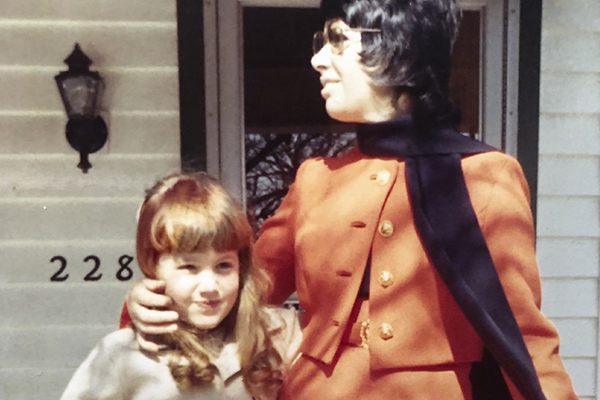
If Trenton was my beginning, then 228 was my first address in the world.
A simple sequence of numbers, unremarkable to anyone passing by. But to me, they were everything. That was where my life took shape—where love lived in ordinary rooms, where routines became rituals, where I learned what it meant to belong somewhere without question.
We lived on the fringe of Chambersburg, close enough to feel its pulse, just far enough to observe it from the edges. Chambersburg was a vibrant Italian American enclave, alive with movement, noise, and appetite. Bakeries and restaurants dotted the blocks, their doors swinging open to the smell of bread, garlic, sugar, and sauce simmering since morning. Food wasn’t just food there—it was language. It was how people showed love, claimed space, and marked time.
You didn’t need a map to know where you were. The neighborhood announced itself; the air carried it.
On the edge of the city, a bridge spanned the Delaware River into nearby Pennsylvania, stamped with words that felt both boastful and true: Trenton Makes, The World Takes. I didn’t understand slogans then, or industry, or what it meant for a city to stake its identity on labor and grit. I only knew the words were big, unapologetic, and certain. They weren’t asking for approval. They were declaring worth.
That mattered.
Trenton never pretended to be something it wasn’t. It worked. It endured. It showed up every day and expected you to do the same. Living there taught me early that value comes from effort—from consistency, from standing behind what you make, whether it’s a factory product, a meal, or a life.
From 228, my world felt both tightly contained and impossibly vast. Our street had its own rhythms, its own cast of characters, its own unwritten rules. Familiar faces passed by windows. Conversations unfolded on stoops. People watched out for one another—not loudly, not ceremoniously, but reliably. Kids played outside until mothers opened back doors to summon us home for dinner or curfew. You were seen, whether you asked to be or not.
Growing up on the edge of Chambersburg meant living between worlds—between old-country traditions and modern American life, between rootedness and motion. Heritage wasn’t curated; it was lived. Names, accents, recipes, and habits were carried forward without explanation or apology.
From that address, from those streets, I learned that identity doesn’t have to be announced to be powerful. It simply has to be claimed.
Years later, I would cross oceans and borders, collecting countries and stories, learning just how large the world really is. But some part of me is still standing at 228, breathing in bakery air, watching the neighborhood move—absorbing the lesson Trenton taught best: that where you come from matters, and that carrying it with you is its own kind of strength.
Trenton made me. The world could take me anywhere it wanted after that.
Kismet, fate, happenstance, coincidence—whatever name you give it, 228 has followed me ever since. It appears when I’m not looking for it: on receipts folded into pockets, in change handed back at stores, on coat checks dangling from thin wire. On price tags, random train cars, road signs, graffiti scrawled where it shouldn’t be. I started noticing it before I believed in noticing things like that. Now I have an entire album of photographs on my phone—small proofs gathered along the way, as if the number itself refuses to let me forget where I began.
228 has a way of finding me.
My first apartment carried it in its address. A dorm room. A mailbox. And then there’s my birthday—quietly falling on the 228th day of the year. Not a grand revelation. Just another nudge. Another reminder.
I don’t believe numbers control destiny. But I do believe in echoes—in the way beginnings leave fingerprints, in how certain places and moments refuse to loosen their grip on you, no matter how far you roam.
228 isn’t superstition to me. It’s memory made portable. It is Trenton folded into the rest of my life—a shorthand for belonging. A reminder that home isn’t only a place; it’s a pattern, a rhythm, a set of coordinates you carry forward whether you mean to or not.
Every time it appears, it feels less like coincidence and more like recognition. As if the world is saying, I know where you come from. And as if something in me is answering back, So do I.
All but one of the 228s were unplanned. I eloped on 2/28—February 28th—after being together with my then-boyfriend for twenty-eight years. It was a date chosen not for magic, but for meaning.
228 was my first address. And it has never lost track of me.
Danielle Barber
Author’s Note: This blog supports a memoir-in-progress. The essays published here stand on their own and do not represent the full narrative, which continues to unfold.